

Body Fossils
Body fossils preserve the actual physical remains or parts of an organism’s body.
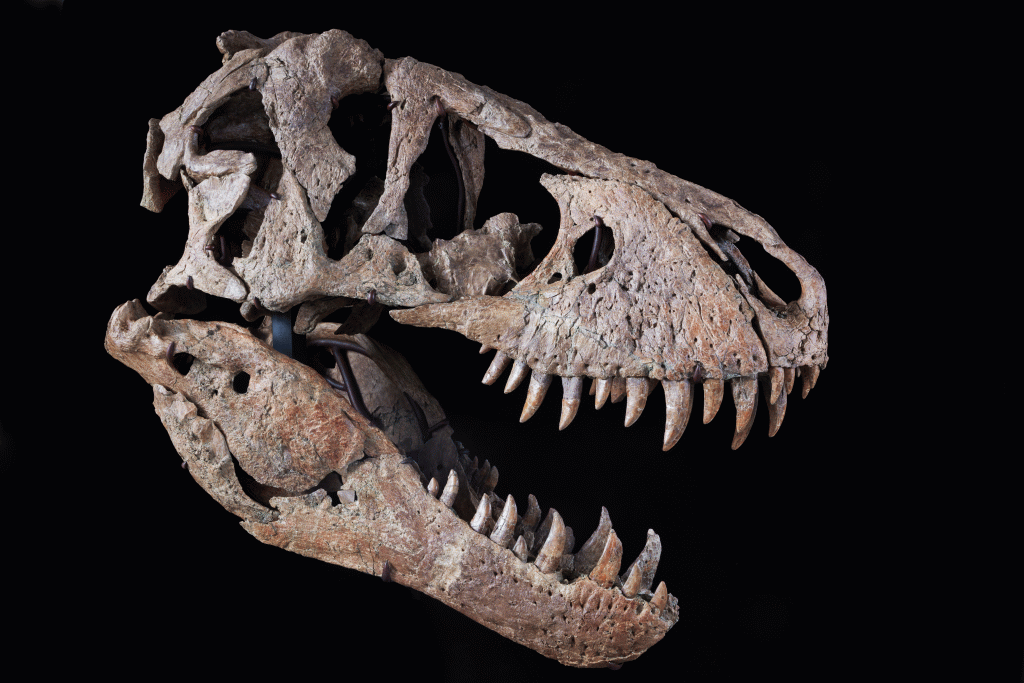
Petrified (Permineralized) Fossils Minerals gradually replace or fill the pores and structures of organic tissues, turning them into stone while retaining fine details. Examples include petrified wood and mineralized dinosaur bones.
Molds and Casts
A mold is an impression or cavity left in sediment after the organism decays.
A cast forms when minerals or sediment fill the mold, replicating the original shape. These are common with shells and bones.
Carbon Films (Compression Fossils) Volatile components evaporate, leaving a thin carbon residue that outlines the organism. This type frequently preserves delicate structures such as plant leaves, fish, and insects.
Amber-Preserved Fossils Organisms (often insects, spiders, or small vertebrates) are entombed in hardened tree resin (amber), which can preserve soft tissues and fine anatomical details exceptionally well.
Unaltered or Original Remains Hard parts such as shells, teeth, or bones remain chemically unchanged. These are relatively rare and typically occur in younger geological deposits. Frozen specimens (e.g., woolly mammoths) and mummified remains also fall into this group.