

Carcharodontosaurus
Carcharodontosaurus ("shark-toothed lizard") was a genus of large theropod dinosaur that lived in Northwest Africa during the Late Cretaceous. It ranks among the largest known carnivorous dinosaurs, comparable in size to Tyrannosaurus rex and Giganotosaurus.
Basic Info About Carcharodontosaurus:
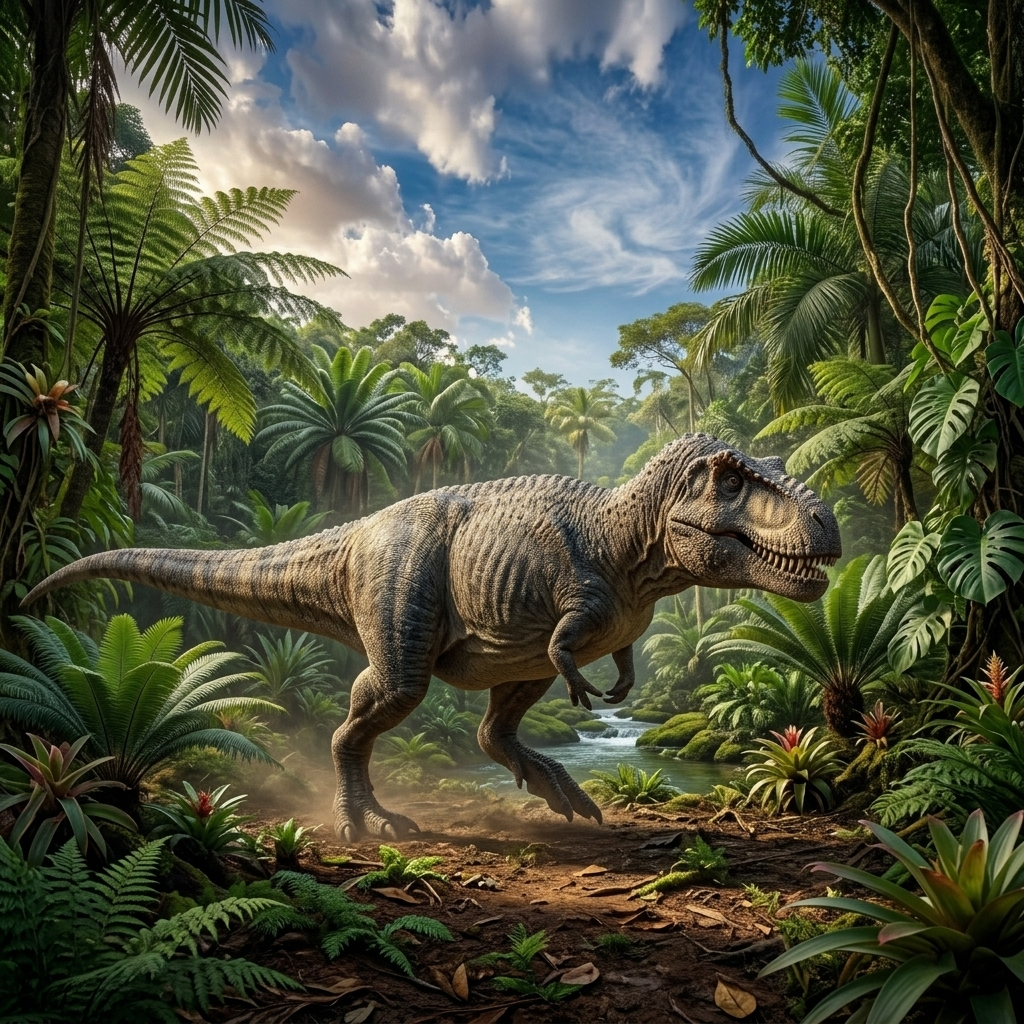
Carcharodontosaurus belongs to the family Carcharodontosauridae within the theropod group. Scientists recognize two main species: C. saharicus (the type species) and C. iguidensis. It was a bipedal carnivore with a massive skull, powerful hind limbs, and relatively small forelimbs. Its name derives from its serrated, blade-like teeth, which closely resemble those of the modern great white shark (Carcharodon). Fossils indicate it was an apex predator in its ecosystem.
Weight:
Estimates for C. saharicus place its body mass at approximately 5–7 metric tons (5.5–7.7 short tons), with some sources suggesting up to 6–8 metric tons depending on the specimen and methodology. C. iguidensis was somewhat smaller, likely around 4 metric tons. These figures position it as one of the heaviest terrestrial carnivores known from the Cretaceous period.
Key Features:
Skull and Teeth: The skull reached lengths of about 1.6 meters (5.2 feet), featuring a lightly built structure with large openings (fenestrae) and depressions (fossae) that reduced weight while maintaining strength. Its jaws contained up to 60 long, recurved, serrated teeth—some measuring 15–20 cm (6–8 inches)—adapted for slicing flesh rather than crushing bone. Bite force was relatively low compared to tyrannosaurids.
Body Plan: It possessed a long, balancing tail, powerful hind limbs for locomotion, and short forelimbs. Overall length estimates range from 12 to 13 meters (39–43 feet) or slightly more, with a hip height of about 3.5–4 meters (11.5–13 feet).
Adaptations: The anatomy suggests it relied on slashing bites and possibly ambush tactics to subdue large prey, rather than prolonged chases or bone-crushing attacks.
Age and Temporal Range:
Carcharodontosaurus existed during the Cenomanian stage of the Late Cretaceous, approximately 100 to 94 million years ago. This places it in the mid-Cretaceous, several million years before the end-Cretaceous extinction event.
Location and Habitat:
Fossils have been recovered primarily from Northwest Africa, including sites in Algeria, Morocco, Egypt, Tunisia, and Niger. During its time, the region featured coastal wetlands, mangrove forests, and riverine environments rich in diverse fauna, including other large theropods like Spinosaurus, crocodyliforms, and various herbivorous dinosaurs.
Fun Facts:
Its teeth inspired the name, directly referencing the "shark-toothed" resemblance to modern great white sharks.
Early fossils were discovered in the early 20th century, with initial descriptions dating back to the 1920s; additional significant finds, including a new species, came from expeditions in the 1990s.
It coexisted with other giant predators in a "dinosaur hotspot" of North Africa, highlighting high biodiversity in Cretaceous ecosystems.
Despite its enormous size, studies suggest its skull was more fragile than that of Tyrannosaurus rex, reflecting different hunting strategies focused on flesh-slicing.