


Knightia
Knightia: Green River Fish
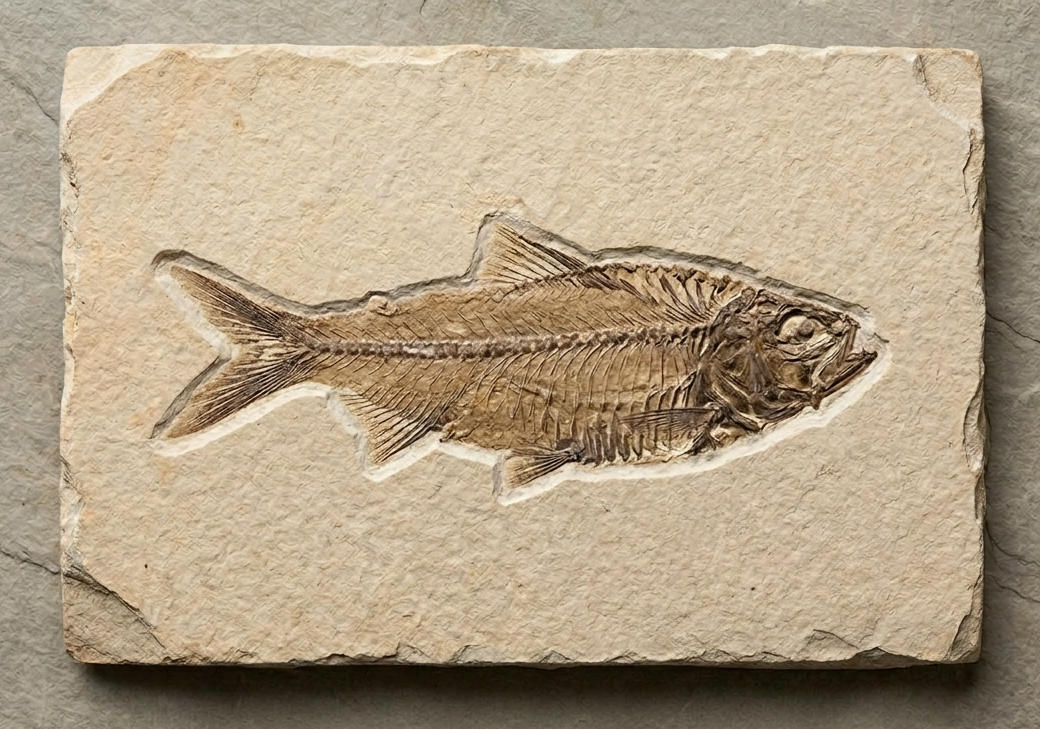
Knightia is an extinct genus of small, bony, freshwater fish that lived millions of years ago. It is one of the most famous and commonly found fossils in the world, often used to help scientists understand ancient lake ecosystems
Basic Info About Knightia:
Knightia is an extinct genus of clupeid bony fish, closely resembling modern herrings and sardines. These small, schooling freshwater fish represent one of the most abundant and well-documented vertebrate fossils from the Eocene epoch. Knightia is recognized as the official state fossil of Wyoming and is among the most commonly encountered articulated vertebrate fossils worldwide, primarily due to exceptional preservation in lacustrine deposits.
Weight:
Adult specimens of Knightia were small, with an average length of approximately 6 inches (15 cm). Based on their size and body proportions, they are estimated to have weighed only a few ounces (roughly 50–100 grams). This lightweight build positioned them as a primary consumer near the base of the Eocene aquatic food web.
Key Features:
Knightia possessed a streamlined, herring-like body with heavy, overlapping scales and small conical teeth adapted for consuming plankton, diatoms, algae, and tiny arthropods. The species exhibited a deeply forked caudal fin, which supported agile schooling behavior. Two primary species are well documented from North American deposits: Knightia eocaena (the larger and more elongate form, reaching up to 25 cm) and Knightia alta (shorter and relatively deeper-bodied, typically 6–10 cm).
Age and Temporal Range:
Knightia existed during the Early to Middle Eocene epoch, spanning approximately 56 to 34 million years ago. The majority of well-preserved specimens originate from deposits dated to around 50 million years ago.
Location and Habitat:
Fossils of Knightia are most abundant in the Green River Formation of southwestern Wyoming, with additional occurrences in neighboring areas of Colorado and Utah. The genus inhabited large, intermontane freshwater lakes and associated river systems in North America, and limited evidence suggests a presence in similar Eocene environments in Asia. These fish thrived in lacustrine settings characterized by periodic anoxic conditions that facilitated remarkable fossil preservation.
Fun Facts:
Knightia is Wyoming’s designated state fossil and is frequently found in commercial fossil collections at accessible prices. Entire schools of Knightia are preserved in mass-mortality layers, likely resulting from the fish entering oxygen-depleted waters. Numerous fossils of larger Eocene predators, including Diplomystus, Mioplosus, and Phareodus, have been discovered with Knightia remains in their jaws or digestive tracts, underscoring its role as a foundational prey species. Originally classified within the modern herring genus Clupea, Knightia highlights the deep evolutionary roots of clupeid fishes