


Megalodon
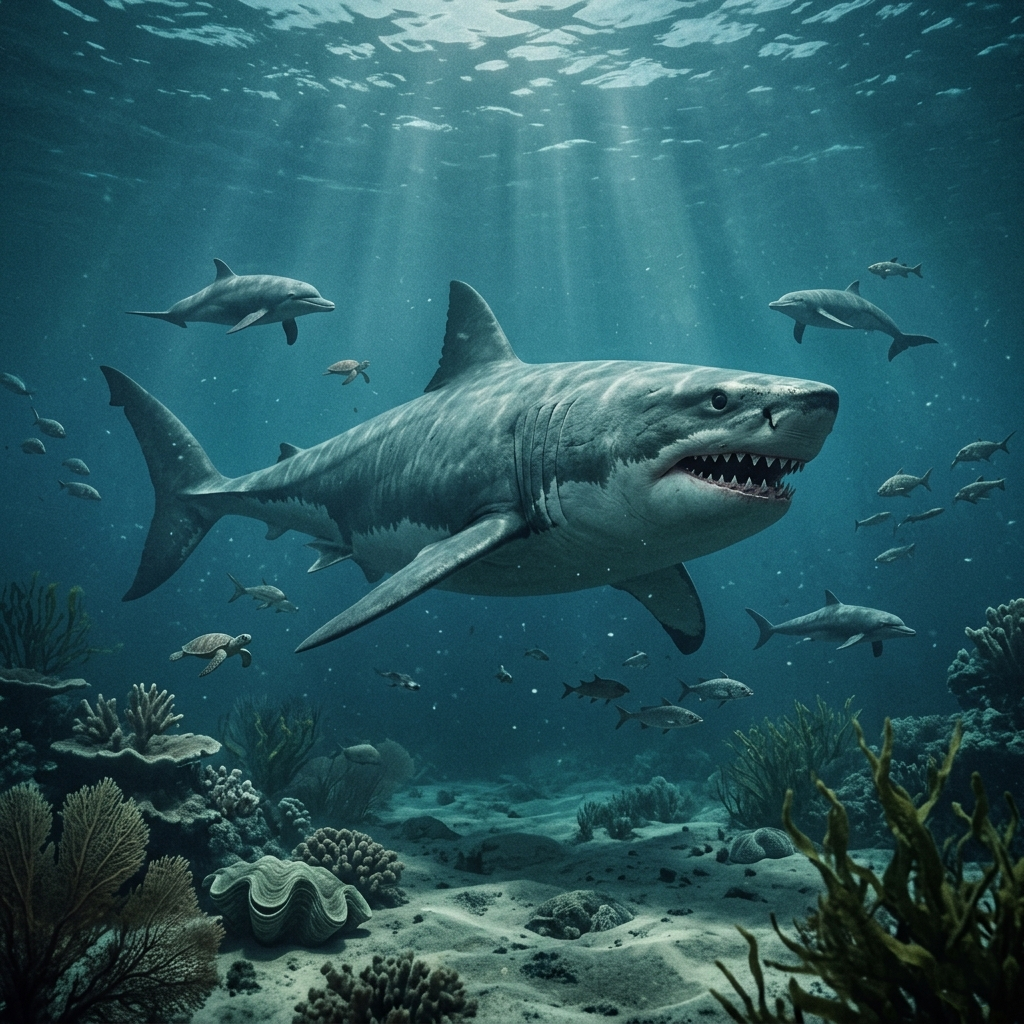
The Mighty Megalodon: King of the Ancient Seas
The Megalodon (Otodus megalodon) was the ultimate apex predator of the prehistoric oceans, a massive shark that dwarfed the modern Great White. Here is an overview of this legendary marine giant.
Basic Info About Megalodon
Otodus megalodon, commonly known as the megalodon, is an extinct species of giant mackerel shark that belongs to the family Otodontidae. It is recognized as the largest macropredatory shark and one of the largest predatory fish to have ever existed. Although previously classified within the genus Carcharocles and considered a close relative of the modern great white shark, current scientific consensus places it in the genus Otodus, which diverged from the great white shark lineage during the Early Cretaceous. Fossil evidence indicates that this formidable predator dominated marine ecosystems through its size, strength, and specialized hunting capabilities.
Weight
Estimates of the megalodon’s body mass are derived from comparisons with modern sharks and analyses of fossil teeth and vertebrae. Adult individuals are believed to have weighed between approximately 30 and 94 metric tons, with larger females exceeding males in both length and mass. For context, a 16-meter specimen may have weighed around 48 metric tons, while maximum estimates for individuals reaching 20 meters or more approach 94 to 103 metric tons—comparable to the weight of a fully loaded railroad car or several dozen modern great white sharks. These figures reflect variations in growth models and body proportions used in recent paleontological studies.
Key Features
The megalodon possessed several distinctive anatomical adaptations suited to its role as an apex predator. Its teeth were exceptionally large—reaching up to 18 centimeters in slant height—triangular in shape, robust, and finely serrated, with a prominent V-shaped neck between the crown and root. These features enabled effective grasping and bone-crushing bites. The species is estimated to have had over 250 teeth arranged in five functional rows, with jaws spanning approximately two meters across and capable of opening to a wide angle. Bite force calculations suggest a range of 108,500 to 182,200 newtons, among the most powerful of any known animal. Body form reconstructions indicate a streamlined, torpedo-shaped profile that was likely more slender than that of the great white shark, supported by elongated pectoral fins and a powerful caudal fin for efficient cruising. Recent analyses propose a maximum total length of up to 24.3 meters, although modal lengths across ontogenetic stages average around 10.5 meters.
Age and Temporal Range
The megalodon existed during the Neogene Period, specifically from the Early Miocene to the Early Pliocene epochs. Fossil records date its appearance to approximately 23 million years ago and its extinction to around 3.6 million years ago. This temporal range spans nearly 20 million years, during which the species achieved global prominence before disappearing near the end of the Pliocene. The precise causes of extinction remain a subject of ongoing research, with factors such as climatic shifts, changes in prey availability, and potential competition with emerging species like the great white shark proposed as contributors.
Location and Habitat
Fossil teeth and vertebrae of Otodus megalodon have been discovered on every continent except Antarctica, demonstrating a cosmopolitan distribution across tropical and subtropical marine environments. The species inhabited coastal waters, continental shelf regions, and occasionally ventured into open-ocean settings. Juveniles tended to occupy shallower nearshore habitats, while adults ranged more broadly, including warmer seas far from polar regions. This widespread presence reflects the megalodon’s adaptability to diverse oceanic conditions during periods of relatively stable global climates in the Miocene and Pliocene.
Fun Facts
The name “megalodon” derives from Greek roots meaning “big tooth,” a reference to its massive, well-preserved fossil teeth, some of which exceed the size of a human hand and were historically mistaken for “tongue stones.”
Its bite force is estimated to have surpassed that of Tyrannosaurus rex, enabling it to prey upon large marine mammals such as whales, as well as other sharks and large fish.
Newborn megalodons are thought to have measured up to 3.9 meters in length, with evidence suggesting ovoviviparous reproduction and possible intrauterine cannibalism (oophagy) among embryos.
Despite its immense size, the megalodon likely cruised at speeds of 2.1 to 3.5 kilometers per hour, demonstrating efficient long-distance travel across ancient oceans.
Fossil evidence includes not only teeth and vertebrae but also rare associated dentitions and even petrified fecal material, providing valuable insights into its diet and biology