


Otodus obliquus
Otodus obliquus: The Ancient Monarch of the Seas
Before the Megalodon ruled the oceans, Otodus obliquus reigned as one of the most formidable predators of the early Cenozoic era. This massive prehistoric shark is widely considered a direct ancestor to the famous Megalodon.
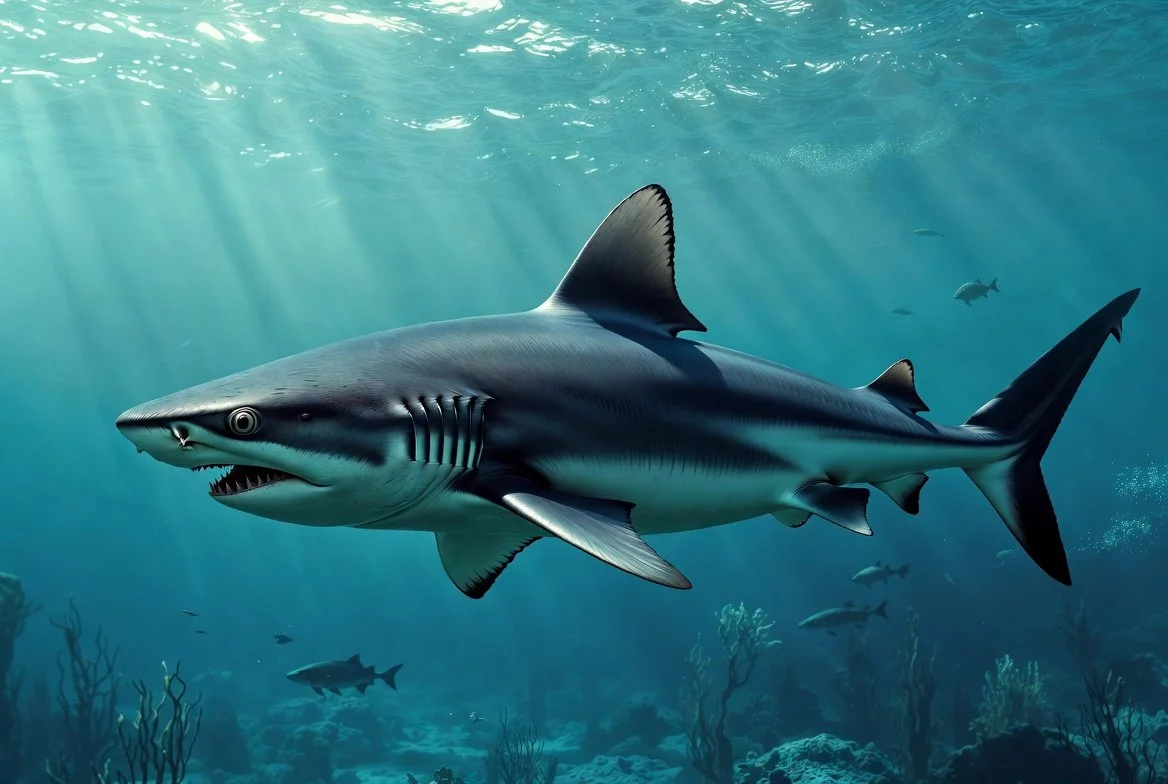
Basic Info About Otodus obliquus:
Otodus obliquus is an extinct species of large mackerel shark within the family Otodontidae. It serves as the type species of the genus Otodus and represents an early member of the megatooth shark lineage, recognized as a direct ancestor to the significantly larger Otodus megalodon. The genus name derives from the Greek words meaning “ear-shaped tooth,” reflecting the distinctive morphology of its fossilized dentition. As with all sharks, the species possessed a cartilaginous skeleton that rarely fossilizes intact; consequently, the fossil record consists primarily of robust teeth and occasional vertebral centra.
Weight:
Precise body-mass estimates for Otodus obliquus remain difficult to determine owing to the incomplete nature of the fossil record. Based on its maximum estimated length of 8–9 metres and comparisons with body proportions of modern lamnid sharks, paleontologists infer an adult weight of approximately 1–2 tons. Some reconstructions suggest higher values may be possible depending on assumptions about body girth, but these figures represent the most widely cited range derived from available scaling analyses.
Key Features:
The most diagnostic feature of Otodus obliquus is its large, triangular teeth, which can exceed 10 centimeters in height and display smooth cutting edges with prominent, divergent lateral cusplets that impart a trident-like appearance. These teeth were well suited for grasping and slicing prey. Vertebral centra exceeding 12.7 centimetres in width further attest to the species’ substantial size and robust build. Overall body morphology is inferred to have resembled that of modern mackerel sharks but on a considerably larger scale, supporting its role as a macro predatory hunter.
Age and Temporal Range:
Otodus obliquus inhabited Earth’s oceans from the Early Paleocene to the Early Eocene, spanning approximately 65 to 54 million years ago. This interval immediately follows the Cretaceous–Paleogene extinction event, during which the species emerged as one of the dominant marine predators in recovering ecosystems.
Location and Habitat:
Fossils of Otodus obliquus exhibit a cosmopolitan distribution, with specimens recovered from Africa (notably Morocco), Europe, North America, Asia, and Australia. The species occupied warm marine environments ranging from shallow coastal seas to more open pelagic waters, including regions corresponding to the ancient Tethys Ocean. A possible nursery area for juveniles has been identified in the Ganntour basin of Morocco.
Fun Facts:
Otodus obliquus ranks among the earliest giant sharks to appear after the extinction of non-avian dinosaurs, filling the ecological niche previously occupied by large marine reptiles such as mosasaurs.
The species is an important evolutionary link in the megatooth shark lineage, with its teeth displaying transitional features that foreshadow the serrated dentition of later forms, including Otodus megalodon.
Despite reaching lengths roughly twice that of the largest modern great white sharks, Otodus obliquus remained substantially smaller than its famous descendant.
Fossil teeth of this species are frequently collected and studied, providing tangible evidence of one of the most formidable predators of the early Cenozoic era.